Showing posts with label culture. Show all posts

Friday, 9 October 2015

Le Gateau Chocolat at Contact


It’s been several years coming but Manchester finally got a taste of Le Gateau Chocolat’s sweet sweet award-winning talent at Contact last night. Forget lip-syncing for your life, the big, bearded and beautiful Le Gateau Chocolat is first and foremost a vocalist of genuine power, and while she might like to cheekily introduce herself as a ‘complete asshole’, her stage persona is life-giving and full of heart – but let’s talk about that voice… Baritone, velvet, dextrous, LOUD – you have never heard the Great American Songbook performed like this. Breakneck trips through the best of the musicals are punctuated with heart-breaking interludes where wigs and music are stripped back for moments of real tenderness. At one point a delicate ‘Hoppipolla’-style piano scale underpins the most touching Whitney Houston interpretation you might ever hear.

The best drag performers have comedy and tragedy at the tips of their gloves, and the music of Ms Chocolat moves deftly between the two. The potted version of Les Miserables will make you want to fast forward through every musical film ever with Gateau on the couch bedside you – hilarious. It’s offset emotionally with moments such as an astonishing tribute to Paul Robeson, where Gateau brings her basso profundo to the painful, beautiful, dignified slave narrative of Robeson’s ‘Old Man River’. It’s a very moving and special moment to see a large, powerful and adored black queer body and voice in all their power.  Queer culture should always be about celebrating that which the mainstream designates as ‘odd’ and ‘other’. Le Gateau Chocolat celebrates herself, and the audience follows lovingly. ‘I have a law degree you know,’ she says, as she switches from one dazzling lycra creation to the next. Defying expectations is where great art begins, of course.


Tuesday, 20 January 2015

Queer Contact, Queer Media, Queer February!

In February I am honoured to be speaking at a panel event which is part of a larger media event which is part of the one of the most exciting festivals happening in Manchester this year. It’s Queer Contact, and the line-up is so good it makes you wish it was actually Pride and that there was a parade at the start.

From the 5th to the 15th a plethora of queer arts comes to Contact and beyond with a program of music, theatre, performance, comedy and more.

National treasure David McAlmont launches proceedings with a live performance on the 5th, alongside the talented Mr Guy Davies, which, from experience, I can promise will be intimate, fun and very touching.

Justin Vivian Bond is another sensational name on the bill and is in town for not one but two performances, including a collaboration with our very own David Hoyle. Bond is a trans icon of cabaret and is here to share Valentine’s weekend with us, using both original songs and familiar cover versions to interrogate and celebrate love. Expect to be stimulated and moved. On top of that there is a related JVB event with a screening of Shortbus and a Q&A to follow.

The Queer Media Festival is a highlight for me. Almost thirty media professionals (and me!) will gather to talk about storytelling, their work, their identities and career paths. There will be films screened, performances, a news broadcast, and a gathering of like-minded but diverse creative individuals under one roof. The event is promising to be a great opportunity for students, for peer-learning and networking, for idea generating, for meeting and greeting, and for exposure to new ways of thinking. Speakers include V-Squared aka Vinny and Luke (YouTube stars), John Bird Media (blogger), Tim Macavoy (Director at InterTech Diversity Forum), Anna McNay (arts editor, DIVA), Paul Brand (Northern Political Correspondent, ITV) and Addie Orfila (producer, Hollyoaks). Tickets here.


Queer Contact has comedy covered with a six-comic line-up for the Comedy Playground, while word nerds will thrill at the selection of poets, novelists and playwrights sharing their practices at Paul Burston’s Polari on the 10th. Kate O’Donnell explores trans identity with humour and music, while site specific drama takes a police raid on a Victorian drag ball as its thrilling subject. The Vogue Ball at Gorilla sees competing Houses dance to victory, or defeat, while Mother’s Ruin host one of their far-from-usual cabaret spectaculars. The closing party, Love Art, is in the hands of the creators of Cha Cha Boudoir so couldn’t be in better hands.


Explore the full line-up for yourself right here and treat yourself to something new and challenging. There will be queer bohemia aplenty at Contact, but all across the city February is turning into a high point in the cultural calendar – Seeing Queerly has a terrific line up, while the first Manchester-based LGBT History Festival provides the context for how far LGBT people have come. February is a chance to learn and connect, network and create, and be touched by art and performance. Please be a part of it. The rest of 2015 has a lot to live up to…


Monday, 11 August 2014

Nostalgia, bulldozers, and Humberto Velez’s ‘The Storming’


Early next year, Cornerhouse relocates and is reborn as HOME on First Street. As I sat down to continue my research for Humberto Velez’s project ‘The Storming’ – the immersive large-scale installation that will be the final staged event at Cornerhouse in April –­ I saw a story tweeted from the Manchester Evening News revealing that the two Cornerhouse buildings (the main building and Screen 1 over the road) are likely to be torn down by the Council at some point in the future when the site is ‘redeveloped’. I’d already heard a rumour two years ago that Oxford Road station would one day be expanded to encompass this entire site, but my hopes of a reprieve had been quietly raised by the lovely Scandinavian-style bike park that’s since been erected outside Java coffee shop. I don’t want to lose that lovely bike park. I don’t want to lose Java either, or the magnificently squalid ‘Exorcist’ steps that barrel down towards Caley Street. And while it would be impossible to justify the existence of a stand-alone cinema screen with no managing body, it will be sad to see Screen 1 vanish too (there’s been a cinema there in one form or another for 103 years), but why the ‘corner house’ building itself, the old Shaw’s furniture store which has become so iconic?

From my frustrated doldrums I tweeted this:


…and this:


The ‘pain’ in question actually referred to my clavicle surgery, but fellow tweeters seemed to sense something like the pain of alienation, and a hearty discussion ensued. Investigations were made into the mysteriously disappeared Grade II listed status of the two Cornerhouse buildings (I know I didn’t dream it, they were listed) and passionate back-and-forths were had about City Council building projects and neglected bits of Manchester architecture. A few hours later one of the tweeters started a petition which at the time of writing has 700 signatures.

Reading back over the original Evening News story it was the word ‘hotel’ that was my main trigger. It’s safe to say that word is my red rag. I lived on Whitworth Street for six years and every day I would pass the abandoned development at the corner of Whitworth and Princess Streets with its contrived yuppie imagery and condescending tone of entitlement and its empty useless scar across the only gay neighbourhood in the city. The hotel and apartments intended to go there have never materialised. Why not build something on it? Legends, the place I partied endlessly in my Whitworth Street years, was bulldozed with meagre resistance in order to build a hotel that has yet to appear (as if its presence could salve the wound anyway). Clubbing in the city hasn’t recovered. London Road Fire Station continues to frustrate and upset anyone who passes by and gives a damn about architecture. Why not do something with that? The old BBC site is a permanent open car park and an uglier space than even the reviled Piccadilly Gardens. Why not build your office/h*t*l complex there?

Let’s be clear. This is not about nostalgia for times past; it’s about demanding an interesting and beautiful future without the need for a scorched earth policy. Nostalgia is a pejorative if it consists only of the endless romanticisation of a thing. When Legends was set for demolition I published a zine named after my clubnight ‘Drunk At Vogue’, featuring articles and artwork protesting the closure. I took a classic Mancunian Situationist approach and wrote, somewhat hysterically:

‘LEGENDS is the mental labyrinth of your DESIRE….!
LEGENDS is one of the ONLY gay/queer spaces that survives outside the GATED COMMUNITY OF GAY PRIDE….!
Mainstream media vouch for the Twisted Wheel as A HISTORICAL MONUMENT and we DOFF OUR CAPS to the dance floor pioneers and the faithful who still believe… But what about ME AND YOU…!
WE ARE NOT ARCHIVES…! WE ARE NOT HISTORY…! WE ARE NOT CRUMBS…!
Every inch of queer Mancunian dance floor is a monument to NOW…!
WE WANT OUR HERITAGE TODAY…!
NOSTALGIA DID NOT SAVE THE HACIENDA…!
HOMOELECTRIC, NOT HOTELS…!
SAVE LEGENDS….!

This is what ‘nostalgia’ ought to be; a kind of anger, and an insistence in a future worth living in. Be ‘nostalgic’ for what you did yesterday, last week, this morning, so that you can keep on living and improving.

You may have heard about ‘The Storming’ already, again in the Manchester Evening News, where it was loosely conceived of as a ‘rave’ style event. This is only one part of the final picture. As we piece together the myriad components of ‘The Storming’, we actively draw on Manchester’s numerous identities, the complexity and diversity of its cultural past and present – clubs and music venues included – in order to celebrate, pay homage and energise the future; and yes, to party hard like Mancunians. As Sarah Perks from Cornerhouse says in the Evening News article:

‘Of course we all feel nostalgic about Cornerhouse closing its doors, but nostalgia only deals with the past and never with the future.’

‘The Storming’ will do things differently. The inspiration point for Humberto’s piece is ‘The Storming Of The Winter Palace’, a choreographed mass action that was staged in Petrograd in 1920 as a piece of ritual theatre which re-played the 1917 revolution in order to sanctify and celebrate its achievements. It wasn’t nostalgia, but a celebratory re-enactment of the recent victorious past that would invigorate a brilliant future for Russia; and the Council didn’t bulldoze the Winter Palace afterwards.


Tuesday, 15 April 2014

Dave Haslam, the 1970s, and me


I have long been of the opinion that the 1970s is the best decade in music, and I reckon I have at least some objectivity since I’m a 90s kid whose favourite band are from the 80s. Six years ago, in my first earnest and naive year of blogging, before Dave Haslam and I became friends, I heard about his book Not Abba. Newly enamoured of Abba’s The Visitors LP and of Taylor Parkes’ magnificent 1995 essay on the band, I felt it was unfair to peg the whitewashing exercise of the 70s nostalgia industry onto poor Abba. It wasn’t their fault, after all, that the egregious I Heart The 70s­ spectacle – in which professional no-names pretend to spontaneously recall loon pants and ‘Night Fever’ as if they hadn’t been prompted to death by BBC researchers who couldn’t be bothered to delve beyond the Top Of The Pops archives – had sieved an entire decade of musical culture down to their five worst singles and outfits. I dashed off a hurried defence of Abba and musical escapism and thought no more of it.

Being a writer, Dave can’t leave an argument unargued and I returned to the blog some time later to find that he had not only read the piece but had responded with a characteristically cheerful and carefully considered comeback which even now I blush to read. The blog entry has since been visited thirteen hundred times (my eighth most popular piece in six years of blogging, stats fans). Some time after this fateful blog incident I was introduced to Dave at a party to celebrate The Art Of Tea in Didsbury getting an alcohol license. ‘You haven’t made your mind up about me yet, have you?’ was his opening gambit.

If you want an idea of how long the backlog of my reading list is, I have just gotten around to reading Dave’s book now. I finished it an hour ago in fact. I haven’t been able to put it down. I wish dearly I had read it six years ago. Now re-christened Young Hearts Run Free (the new title is nothing to do with me, I'm sure), the book has an Intro, an Outro, and a chapter dedicated to each year of the 1970s. Forget about Abba and I Heart The 70s, forget about my blog entry (every point of which was already covered and expounded in the book), forget revivalism and all the rest of it. The book is about life as it was lived in the 1970s, the soundtrack to that life, how magnificently varied that soundtrack was, and how all of it was connected and entwined together. It’s also about the slippery, emotive nature of memory, and of nostalgia itself. ‘We’ve all forgotten a lot,’ Dave writes. Whether it’s the wilful erasure of hard fact, as exemplified by the Watergate scandal of 1972, or the simple fact Led Zeppelin don’t figure on nostalgia shows because they didn’t put out singles and didn’t appear on TOTP, the effect is the same.

The musical insight is exhaustive and a real education, but as always it’s the (extra)ordinary folk that people the story who are the real heart and soul of a history like this. Jayne Casey, a displaced, misplaced youngster, waif of Merseyside social services, is dreaming of like-minded souls, preferably boys in mascara. These arrive in the shape of Pete Burns and Holly Johnson and the musical scene at the legendary Eric’s which eventually spawned some of the best records of the 80s. Gay punk turned disco devotee, Alan Jones adds welts and fake blood to his Vivienne Westwood shirts and dances to ‘Paranoid’ in gay bars. Clover from Withington falls in and out of the burgeoning Rastafari culture, in and out of love, in and out of her parents’ favour. There are moments that, for better or worse, can choke you with pure evocative impact, whether it’s the BNP’s Kingsley Read responding to the murder of a young Sikh lad, Gurdip Singh Chaggar, saying, ‘One down, one million to go’, or John Lydon spinning ‘Born For A Purpose’ by Dr Alimontado on Capital Radio. Underneath all of this, the power goes on and off, bombs erratically tear apart life and limb in the pubs of Birmingham, an increasingly diabolical Met attempt to turn Notting Hill into a police state, and the unnerving voice of Wearside Jack murmurs and hisses from magnetic tape while the real Yorkshire Ripper continues killing women in allotments and car parks.


It’s also about England as it is now, or at least an England I just about recognise; tribal, energetic, indifferent, violent. Just last night I saw a very drunken and shabby guy harassing a girl at Piccadilly bus station, urging her to vote for the racist UKIP party, complaining about how many children the foreigners were having. The girl was too young to vote, too bored to care. As the bus wove its way through South Manchester, the same drunk guy rolled his eyes and tutted and sighed aggressively as a South Asian woman took a call on her mobile phone in her native language, a very ordinary Mancunian scene, but one that caused him bemusement, anger and discomfort. If only somebody could explain to him that it isn’t Asian women on their phones on the bus who have put him where he is – broke, drunk, hating – it’s other white guys, ones with lots of money. What’s changed in thirty-odd years I wonder?

At the end of the book we peer momentarily beyond the end of the 70s, through the dark door of the 1980s to March 1984 when the miners have just begun their epic doomed struggle. By a pure fluke the majestic nine and a half minute version of ‘The Power Of Love’ byFrankie Goes To Hollywood comes on my stereo, a Number One single in December 1984, the year I started school, the year ‘the miners fought the law, and the law won.' As I read and ponder the strike, the heartache, capitulations and police beatings, Holly Johnson sings, ‘When the chips are down I’ll be around,’ and for a minute it’s all a bit much and I have to stop reading.

I’d still fight for Abba, of course I would (okay, maybe not ‘Bang-A-Boomerang’) but only in the knowledge that there’s never just one story worth telling, and there are no happy endings either, not least because it’s not over yet. That’s what this remarkable book is about.


Coda: I have, of course, made a playlist to go with this blog entry which you can listen to on Spotify by clicking here. It’s not chronological or exhaustive, but all the songs are name-checked in Dave’s book and so it is at least wildly or widely representative of an astonishing ten years of music.


Monday, 17 October 2011

The Manchester Weekender 2011: All Done For This Year ... Or Is It?

I love city festivals. I love that feeling of being on holiday in the place you live. I love disparate events with a collective purpose. I love tearing all over town and Tweeting about it. I love free wine and cheap tickets and good conversation with motivated people. A hectic calendar of Manchester festivals (International, Pride, Jazz, Science, Food and Drink, Literature, Asia Triennial, Comedy, and of course the Weekender) provides this in spades.

The savvy thing about the Manchester Weekender is that it mingles events that might already be happening with new and specially-commissioned work to create mutual enthusiasm and mass encouragement to get out there and see what your city has to offer.

At Castlefield Gallery, Istanbul artists blend ideas of vacation and immigration, utilising everything from suitcases to IKEA-style stills of visa application offices. Entry is through a metal-detecting airport security gate. On the inside, voices of authority are aired through video interviews with visa office employees while the voices of the disappointed and rejected literally envelop the entire gallery on the outside; the walls and windows are papered with correspondence from people denied entry into various countries. The exhibition forms part of the ongoing Asia Triennial Manchester.


Against this backdrop Beating Wing Orchestra give a musical performance with a global and mesmerising blend of influences; old European, pan-Asian, Congolese, hip-hop, Bhangra, all with astonishing vocal dexterity. ‘World music’, explains one of the singers simply. A terrific feeling of camaraderie between band members, and eventually between band and audience too, make this a special event.


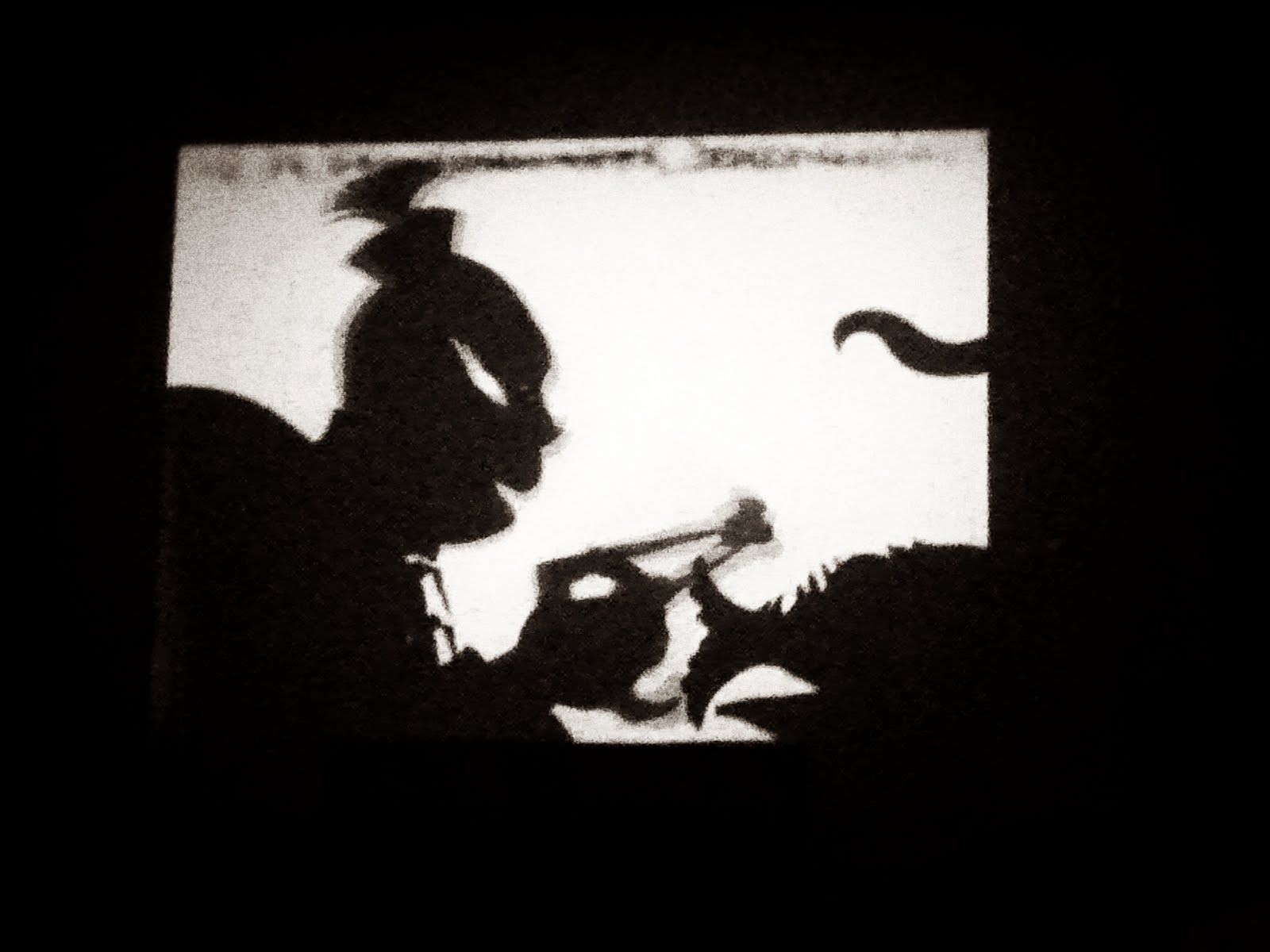
Down at the Whitworth Gallery, After Hours present ‘BlackLab’, an amalgam of set pieces that complement the existing ‘Dark Matters’ exhibit. Both play with light, film, delay, transparency, print, music and motion. The slow-mo movie of burning oilfields is weirdly touching while next door live guitar and cello soundtrack short films of traditional paper silhouette stop-motion. Whether the man shouting ‘MARGARET THATCHER! KARL MARX!’ is an installation himself or someone with political Tourettes I’m still not sure. ‘Cosmodrome’, screened in the auditorium, pays melancholic testimony to the heroes of Soviet space travel.


‘Primitive Streak’ is fashion meets life science. Divided between the Royal Exchange mezzanine gallery and the windows of Debenhams, the clothes shown in photograph, sketches or their final stitched form are inspired by the cellular development of living humans, so we get designs for spinal couture, a ‘sperm’ dress and, my favourite, the ‘Anaphase Dress’ which surely should belong to Bjork by rights?


Time to hit the shoe leather for two Mancunian walks. The first sees Ed Glinert from New Manchester Walks take a group of booted and be-torched urban explorers through Manchester’s concealed subterranean history and its fascinating links with Nazi invasion, state secrecy and ambitious canal endeavours. It’s thrilling and unnerving to be metres beneath Deansgate and not hear a sound. Memories of people enduring uncomfortable, diseased hours in the expansive bomb shelters feel all-too tangible in that dank air.

Then it’s back into sunshine and air for a tour of Ancoats, incorporating old and new, alluring decrepitude and ambitious renovation. The ‘Ancoats Peeps’ are discrete viewing portals, historical fragments placed in oblique locations that preserve images of Anocats’ past even as the district develops around them. Beginning and ending at the beautifully designed Cutting Room Square, the tour brought us into renovated cotton mills and the breathtaking interior of St Peter’s Church, soon to provide rehearsal space to the Halle Orchestra no less. A book is available to chronicle and complement the ‘Ancoats Peeps’.


The weekend ends on a high with Dave Haslam’s ‘Close Up with Jarvis Cocker’ in the intricate Gothic majesty of the Town Hall’s Great Hall. Surrounded by Ford Madox Brown’s vivid and edifying murals, Jarvis and Dave talk music, lyrics, sex, Michael Jackson and recession Britain before a rapt audience. Wonderful fun.


Though the Manchester Weekender is officially over, it is in fact a gateway to an autumn/winter schedule packed with events like the ones above. Festival season continues across the city. Check links, get on mailers and Twitter feeds, see what’s afoot. After 48 hours of cultural input it becomes apparent you can make a Manchester Weekender for yourself whenever you like. Get going ...


(Big thanks to Holly Jennison at All Points North)

Wednesday, 12 October 2011

The Manchester Weekender 2011


The leaves are dying a death but the city’s alive and kicking. Music, art, theatre, politics, underground, overground, lots of it free! That’s what Creative Tourist have magically/manically pulled together for the imminent Manchester Weekender, running from this Friday (14th) to the far end of Sunday evening.

‘It’s all about engaging conversations, big questions, daring performances, secret places and cool spaces,’ says the spiel. Perfect.

The good folk at All Points North have asked me to delve in and report back from the artistic front over this frantic three-dayer, and I’ve accepted the challenge.

A full guide for the three days can be obtained right here, and a more compact version, a clash-finder if you will, is here. Best get planning. Here’s what’s currently taking my fancy …


Primitive Streak … couture meets evolutionary science in these free exhibits at the Royal Exchange and Debenhams

Sounds Like A Gallery … tributes to Manchester Art Gallery and its collection told through the medium of the banjo (!) and other instrumentation

Beating Wing Orchestra … part of Asia Triennial, migrant and refugee musicians make up this collective performing at Castlefield Gallery

After Hours presents BlackLab … a blend of prose, film and still photography, soundtracked live by artist and musician Otto Smart


Gothic Splendour … embrace Manchester’s Victorian roots by visiting Ford Madox Brown’s dozen murals housed in our beautiful imposing Town Hall

Underground Manchester with New Manchester Walks … torch, boots and backbone required for this subterranean exploration beneath the city streets

Ancoats Peeps … the endlessly rich story of the Ancoats streets is the subject of this walk, taking in historical buildings and new installations

Jarvis Cocker: Close Up with Dave Haslam … Round off your epic weekend in the company of a contender for the title of ‘Greatest Living Englishman’ inside the Town Hall’s wondrous Great Hall. Jarvis Cocker will be there too …


If you’re out Tweeting during the Weekender the hashtag is simply #McrWeekender so let’s get trending while we’re trekking.

See you out there…