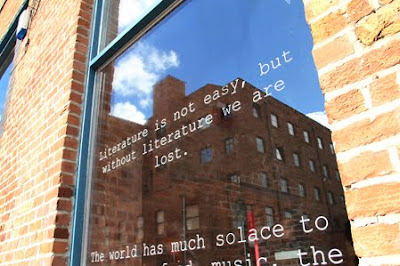
I took a little
writing sojourn to London recently, a long weekend in the wilds of Streatham
Hill to live with a cat named Trevor. I spent a day in central London first
though, visiting various places I’d been meaning to go to for ages. Saint Paul’s
Church, Covent Garden – otherwise known as ‘the Actor’s Church’ – is where many
a famous thespian is remembered. I got teary-eyed before I even made it inside,
as each of the benches in the churchyard carries a commemoration, from Beryl Reid
(‘So much love…’) to a long-serving head
librarian at the RADA. The church itself was officially closed but I snuck inside
by holding open the door for a man carrying a set of bongo drums. Inside is a
lovely modest sort of church with plaques everywhere for the great and good of
British stage and screen. That’s one reason I wanted to go, another is that legend
has it that the first of London’s plague victims is buried here, one Margaret
Ponteous, 1665. And yet another is that Henrietta Street, which runs alongside Saint Paul’s, was home to the Hell Club, an early New Romantic
hangout, before they were called New
Romantics and before they took over the Blitz. Steve Strange tells an amazing story
of how everyone was on acid one night in Hell and the club was so hot they all
spilled out into the graveyard and danced around there, tripping their noodles
off in their outrageous costumes. Isn’t that an amazing image? I liked it
so much I've drafted an entire novel plot around the idea.

Having
soaked up these lovely pagan vibes, I emerged into the decidedly more
Christmassy environs of Covent Garden looking for coffee, which I found in a
state of near perfection at New Row Coffee.
The coffee is incredible, go there. They’re
lovely folk too. Revived, I then walked to Soho to have a nosey at the Soho Hotel
where one of the scenes begins in the novel I’m working on. There’s not much to
see, Dean Street turns into a little mews with a red brick and quite
Mancunian-looking structure piled up the end, which is the hotel. There’s a large
shiny black Buddha cat in the foyer. From there it’s a short walk to Soho Square.
I make a little pilgrimage here from time to time, especially when it’s cold, to
sit on a bench and play ‘Soho Square’ by Kirsty MacColl, whom I adore and miss
terribly... ‘… kiss
me quick, in case I die before my birthday…’
Next
stop is Southwark and I decide to take a Boris bike. Opposite the bike park at Soho
Square, Will Young is waiting for a cab, holding a bunch of flowers. My mother wants
me to marry Will Young so I wait at least until eye contact is established, but
it’s brief. I guess the flowers are not meant for me. Will gets in his cab with
barely a glance and I hop up on my bike. I love Boris bikes. It only costs a
pound – and almost my life at Piccadilly Circus – but before I know it I’m
sailing past the Thames, over Blackfriars’s Bridge, and into deepest Southwark.
(When is somebody going to put something interesting where that old sandwich
shop is at the bottom of the Blackfriars’s Bridge by the way…?)

Southwark
is my very favourite bit of London, even more so now that I’ve been to the Cross
Bones Graveyard, which you can read about here, and also
because I discovered yesterday that Stock, Aitken & Waterman’s Hit Factory
was round here too, on Vine Yard. I love Borough Market of course, and Tooley
Street, and I’m even coming round to the idea of The Shard. Maybe. Yes, Southwark
is the place for me.

From
London Bridge I catch the train to Streatham Hill, deep in the South London
suburbs. Angela Carter country. I arrive in the dark, meet Trevor the enormous
handsome cat, do some writing, and go to sleep early. In the morning I leap out
of bed and go for a jog in the dazzling autumn sunshine. I plough into the school
run for the primary school a few doors down and from there I run to Brockwell
Park, run right around it, and home. It’s downhill all the way and uphill all
the way back. My legs are still in considerable pain four days later. It is the
last jog I am even able to do for the rest of the trip. None of this bodes well
for the sponsored 10K I am meant to run in May.
After
a day of writing I catch the train back to Southwark. London is steeped in a
marvellous silver fog by now. I walk over Tower Bridge, which is every bit as
exciting as Brooklyn Bridge tonight. I walk down Park Street which is magical
and Dickensian. We are looking for The Rose Theatre, London’s oldest surviving theatre,
and the very first to open on Bankside. Tonight they are performing The Winter’s Tale on a small fenced stage
above the excavation site of the ancient theatre. The Rose preceded even The
Globe just along the river, opening in 1587. Shakespeare performed here as an
actor and staged two of his own plays here too. The layout of the theatre, the outside
wall and jutting stage, is described in red lights so you can see where the building
once sat. It’s thrilling. I can feel old voices and ghosts coming up through
the ground. Musicians play over in the far corner of the excavation site, lit
by candles. The performance is lovely too; enticing and fun and heart-breaking.
Francesca De Sica’s Hermione is wonderful. I am given a flower (at last!) by guitar-playing
troublemaker Autolycus, but even he reclaims it at the end of the play. I take
it as a good omen though. I fall for The Rose, and they have just this week
heard they will be getting a
Heritage Lottery Grant to complete the excavation. If/when The Shakespeare Girl is published I want to have my launch party
there. Some fine ale follows in The George,
off Borough High Street. There has been a pub on this site since at least 1543
and the current building dates to the mid-seventeenth century. Yes, Southwark is
the place for me.

I
am then firmly holed up for the next couple of days, churning out thousands of
new words and feeling the spirit of what I first planned to write all those
months ago. Twenty-three thousand words in, The
Shakespeare Girl is coming to life. Missing social events and getting used
to solitude gets easier the longer you write. Having a terrifyingly close
deadline also works wonders. Angela
Carter’s last novel, Wise Children,
was a large part of the original inspiration behind the story. Streatham Hill
is next to Balham, where Carter grew up, and I find out her old school is not
far away so I take a walk there. It proves impossible to find mention of the
house she grew up in though. I expect the present tenants would like to avoid
legions of bespectacled girls in maxi skirts, and me, leaving flowers at the
gate. Anyway, she’s in the leafy air down there somewhere and I go home and write
a scene about a famous actor who goes out into the Soho night in drag, and I
think she would approve.


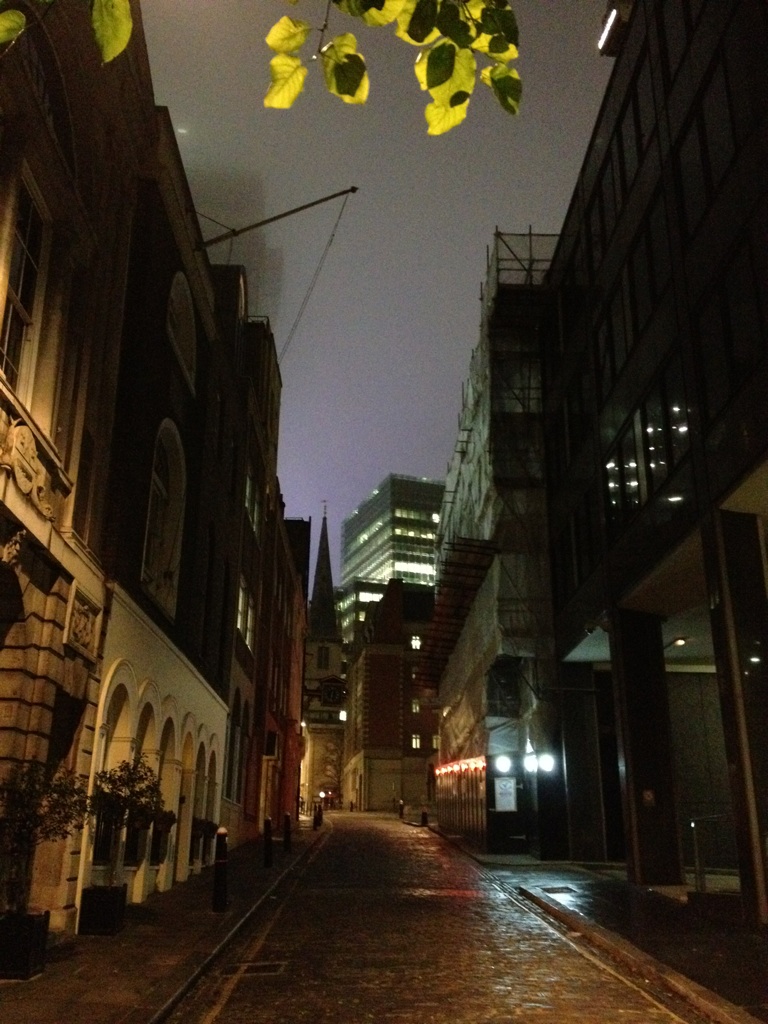

Angela Carter's old school.